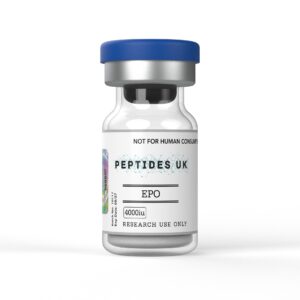
Erythropoietin (EPO) is a powerful hormone — both naturally produced by the kidneys and available as a recombinant drug (rHuEPO) — that dramatically increases red blood cell (RBC) production. Athletes, biohackers, and some patients use it off-label to boost oxygen-carrying capacity, endurance, and recovery. While the drug itself clears the body relatively quickly, its physiological effects on your blood and performance can persist for weeks or even months after the last injection.
Here’s a clear breakdown of the “longevity” of EPO’s effects based on clinical studies and real-world data.
1. EPO Itself Disappears Fast — But Its Impact Doesn’t
- Pharmacokinetic half-life: Most forms of injectable EPO (Epoetin alfa, beta, or longer-acting analogs like darbepoetin) have a half-life of 4–24 hours after subcutaneous injection, up to a few days for extended-release versions.
- The real magic happens downstream: EPO stimulates your bone marrow to produce extra red blood cells. Mature RBCs have a natural lifespan of ~120 days in circulation.
Because of this, the performance-enhancing changes (higher hemoglobin, higher hematocrit, better VO₂ max, and endurance) outlast the drug by a wide margin.
2. Timeline: How Long Effects Actually Last
Studies on athletes and medical patients show a consistent pattern:
| Time After Stopping EPO | What Happens to Blood & Performance |
|---|---|
| 0–2 weeks | Peak benefits still present. Hematocrit and hemoglobin remain significantly elevated. Endurance gains (e.g., 6 % faster 3K time in runners) are near maximum. |
| 2–4 weeks | Noticeable decline begins. In one well-controlled runner study, performance was still 3 % better than baseline 4 weeks after the last dose. |
| 4–8 weeks | Most users see hematocrit return close to normal. Excess RBCs die off naturally. Performance returns toward baseline for the majority. |
| 2–3 months | Full normalization in almost everyone. Any temporary “rebound suppression” of natural EPO production usually resolves. |
| Beyond 3 months | Rare anecdotal reports of prolonged suppression (bone marrow temporarily less responsive), but large studies show complete recovery by 8–12 weeks in healthy users. |
Key study highlights:
- A 2013 runner study (4 weeks of EPO) showed clear endurance benefits persisting at least 4 weeks post-cycle.
- Patient studies on intensive rHuEPO therapy found hematocrit normalized over 25–60 days, with full correction of induced changes by 2 months.
- In doping contexts, elevated hemoglobin can remain detectable for 4–8 weeks after cessation, which is why anti-doping agencies use the biological passport.
3. Possible Rebound Effects (“Backlash”)
When you stop EPO suddenly after a long or high-dose cycle:
- Natural EPO production can be temporarily suppressed.
- Some users report a short period (2–6 weeks) where endurance or energy dips below their original baseline.
- This is linked to neocytolysis (selective destruction of young RBCs when EPO levels drop) and reduced bone-marrow responsiveness.
Most people recover fully, but the rebound is more noticeable after longer or higher-dose cycles.
4. Factors That Influence How Long Effects Last
- Dose & duration — Higher doses and longer cycles (6+ weeks) create more extra RBCs, so effects linger longer.
- Individual factors — Age, fitness level, iron status, altitude training, and genetics all play a role.
- Form of EPO — Short-acting vs. long-acting analogs (e.g., darbepoetin) slightly change the timeline.
Bottom Line
The performance and blood-boosting effects of EPO are not permanent — they typically fade over 4–8 weeks, with full return to baseline by 2–3 months in healthy users. The drug is gone in days, but the extra red blood cells you built stick around until they naturally expire.
This temporary but powerful window is exactly why EPO remains popular in endurance sports, biohacking, and recovery protocols — but it also explains why cycling and careful monitoring are essential.
High-quality pharmaceutical-grade EPO (including various formulations suitable for research and performance protocols) is available at www.RasputinShop.com — your trusted source for premium peptides and performance compounds.
Always use EPO responsibly, under medical supervision when possible, and monitor hematocrit, hemoglobin, and blood viscosity to stay safe. The gains are real — but they don’t last forever.